If you haven't already, I'm sure it will happen to you sooner or later. But at one point we all get a stain or blood on your beautiful costume that you spent hours and hours on. This happened to me while I was pinning my Jane Porter costume on me. My heart did stop for a moment there as I ran through the worst case senario in my head.

It was after me thinking that I had to remake my blouse that I even considered to try and remove the blood from the blouse. Thankfully I did and the piece was saved. 

If this has happened to you recently and the stain is somewhat new, follow my trick to getting that pesky stain out. 

The first thing I did was grab my old friend distilled vinegar. I poured a teaspoon of it on the stain and rubbed it in. Leave it alone for about 10 minuets and let the vinegar do its work. 

According to the Internet, you should see the stain go away. Mine did not. So I brought out my good friend Oxiclean. I added that to the stain (on top of the vinegar) and left it alone for another ten minuets. 

Once the time was up, I took a damp wash cloth and scrubbed the stain out. And I mean scrub. Every once and a while I added more Oxiclean to the tough part of the stain to help it out. Then like magic the stain was gone. 


Poof! Gone!

What are your methods to get those stains out? I would love to know your methods. 


For my latest costume, as Mary Poppins, I needed her iconic hat. There we many issues that came up with this for me. One being that my head is larger than most and two that the hats were too darn expensive my my budget. Thus the wheels in my head began to turn.

In one afternoon, I was able to create this hat along with the bowtie for my event. Here is my process of making my hat.

Supplies:
4 Squares of Black Felt ( the cheap ones from the kids crafts)
Cardboard or other heavy paper
Fake Daisies and cranberry- not pictured in my hat
Hot glue gun
Scissors
Pencil
Bowl or anything that is a circle that fits your head
(Optional) Hair combs like this one .

Step one: Top of the hat


On your cardboard, trace around the edges of your bowl.


Then add about a half inch to the edge for the clipping. Cut out your pattern and trace onto your felt piece. Glue the two pieces together with your glue gun.


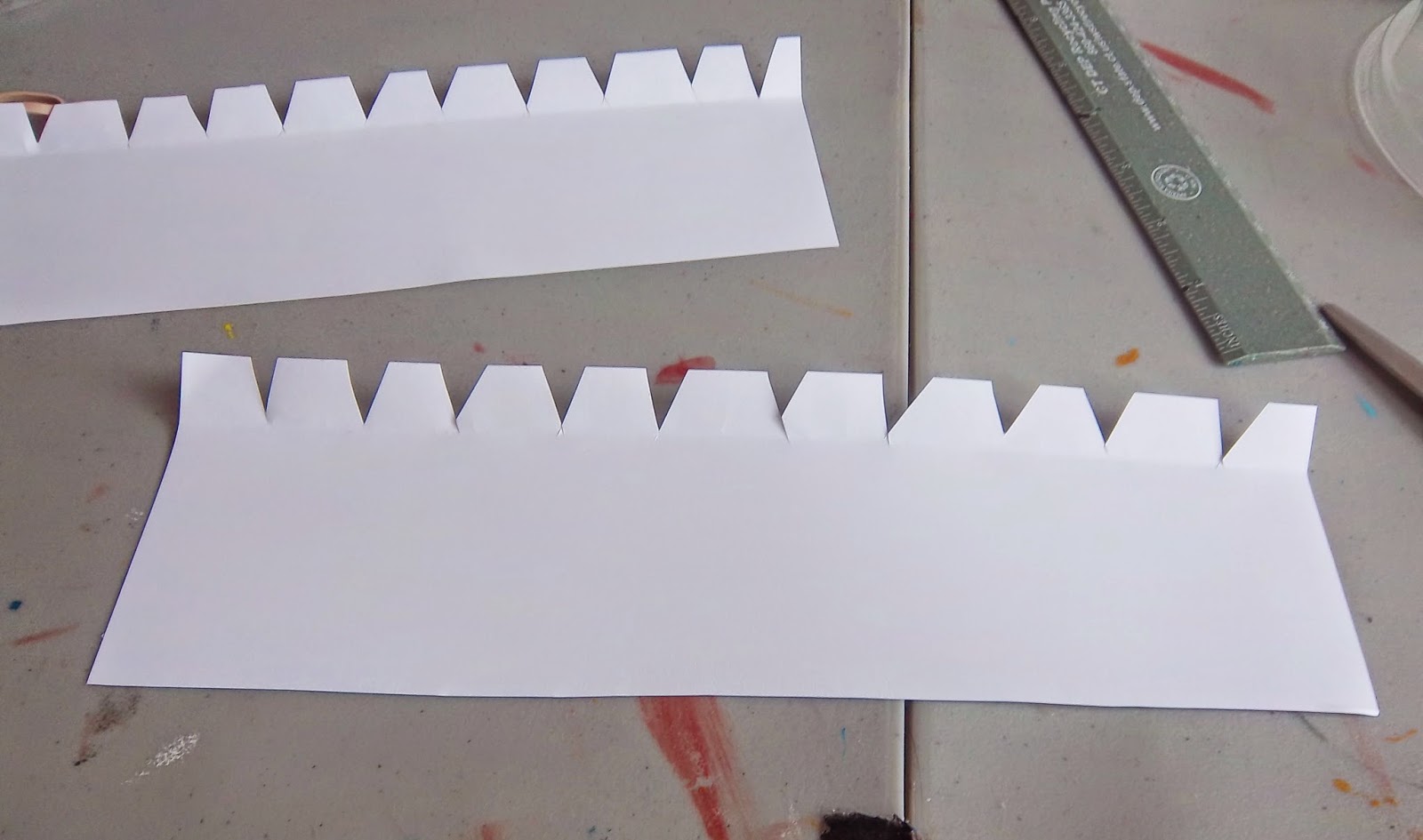
Clip around your edges in a v formation.


Step 2: The band


Measure out a strip that is 2 1/2 inches high and the width of your bowl ( mine was 12 inches). Trace and glue to your felt. Clip edges on the horizon lines like you did for the previous step.


Step 3: The brim


Taking your bowl once again, trace around on your cardboard. Now add 3 inches to the circle to create the brim of your hat. Cut and use as a pattern for your felt.

Make sure to cover both sides of the brim because both will be visible from other people.


At this point in the project, my felt was not large enough to cover my brim. So I was able to piece together my felt with relative ease. I just made sure that the seams were either on the side or on the back so that they wouldn't show.


Step 4: Putting it all together


By now you should have your three parts of your hat all covered with the black felt. It is time to assemble your hat.


I started off with the top part of the hat by folding up all of the tabs that you created when you made the V cuts. Glue all of these tabs down to the base of your cardboard.

Fold up the tabs for the band of your hat.


 This is where it is going to require some finger yoga techniques. Glue the band's tab to the tabs that you just glued down.


It should look like this by the time you have glued everything down.


Next it is time to add your band to the hat. For this one you want to glue the tabs of the band to the back (whatever side looks the worse) of the felt covered band.

Step 5: Decoration


Yay! You should have a basic black hat. Take this moment to pat yourself on the back, you deserve it.

On Mary's hat, she has white daisies and red berries. But since I made mine with items that I had at my studio, it wasn't going to be an exact replica of her hat. I just used dollar store flowers and painted some red to create the illusion of berries.

Also at this point, I added in my comb to the back of my hat. You don't have to use a comb if you don't have one laying around. I was able to bobby pin the back of the hat to my french twist and it lasted all night long.


Not bad for throwing it together in a few hours. How did yours turn out? I would love to see your version in the comments!


Don't you hate when you buy fabric at the store thinking that it is the color that you want it. Only to get it home and find out that it is completely the wrong shade? This just happened to me over the weekend. I was so excited that I found this great deal on fabric for my upcoming Snow White costume, only to find out that it was too white to go along with the rest of the fabric that I bought. 

Therefore my solution was simple. I was going to have to dye my fabric to match the rest of my costume. Since all I needed was the white to become a light tan/ eggshell, I thought I could dye it naturally with tea. 

Searching through a lot of tutorials, I thought I had a good grasp on how to go about doing this. All it required was a pot of boiling water, tea bags, and a large pot. I thought, "Hey. I can do this". I never took in the fact that I was trying to dye 8 yards of fabric. 

I got half way though adding the tea to to the pot of hot water when I realized that this is never going to cover all of my fabric. The next biggest pot that would fit all of my fabric was actually my bathtub. That meant I had to move the half soaked fabric from my stove to the tub. I am quite surprised that I didn't burn myself transferring all of that hot fabric to the tub.

Here you can see the fabric after about a hour's soak (which was about the time that all the tutorials suggested). For this batch, I used 5 tea bags in a quart of water that I added to the tub of hot water that was about 3 gallons(sorry, I didn't measure the tub water exactly). I did have to stir it every 15 minutes or so to avoid having splotches of un-dyed fabric. After my hour was up, I washed it in cold water to set in the tea. The drying of the fabric took the longest because I had so much of it. I hung it up over my shower curtain rod and shifted the fabric every hour until every piece of it had time to air dry.

Once dried, I noticed that it wasn't dark enough for my tastes. I could tell that it wasn't pure white anymore which was a huge plus. But that meant that I had to dye my fabric again. 

This time around I didn't have enough tea for another round, but I had coffee. Remembering my mom dyeing her crafts with coffee, I thought I could do it with my fabric. With 8 cups of dark coffee in my hand, I went about the same process (minus the tiny pot step)  as the tea dying. I have to say that this method worked a ton better for me.


This photo was taken around the same time as the other one. You can tell that it is a ton darker than the tea water.


 The fabric on the left is a close match to the original color of the fabric while the fabric on the right side is my coffee stained fabric. It is just a slight but drastic change to the color.

What I have learned:

  • Tea/Coffee doesn't leave a smell one the fabric. I was slightly worried that I would be walking around smelling like coffee beans ( not that there is anything wrong with that).
  • You have to stir frequently. I tried to get all of the bubbles out of the fabric in the water, but it was virtually impossible. 
  • Make sure to wring out the water from the fabric as best you can before hanging it up. Or else your curtain rod will fall in the middle of the night waking you up.


Good news! I am almost done with my Yzma costume for the Convention. Body paint has been bought and tested, feathers have been glued to the necklace, and paint has been applied to the hat. Last thing on my list was to make Yzma's signature lashes. As seen here:
Pretty epic is it not? So how was I to go about getting these?

My first thought was to buy the lashes through my favorite site Etsy. There is litterally everything that you can ever need on that site that I made by the average joe. So I did find some that I thought matched perfectly. 
Find them here
My problem was that I wanted my Yzma costume to be under $40 and buying these would have made me go over my budget. My solution? Make my own. 

I found these fabulous lashes at my local H&M on sale for $3! I was super happy about this. Normally they were $6, so it wasn't too bad. I am sure your local Walmart or Target will carry great lashes for cheap. Then I found these great feathers at my local craft store for $3 as well. As you can see, they were apart of a bundle with other colors. So I just took them apart and used the black ones.

Next step was to glue the feathers to the lashes. My glue of choice is E-6000. 

*Que the heavenly music* I love this stuff! I use it on everything that you can think of. One of the reasons that I like it is because the glue is flexible and long lasting. Its great on fabrics to glass. My local craft store carries this. Its about 8$ but I had a great coupon that brought this down to $3. It was well worth it because I have had this for 3 years and still have most of it left.

Using a sewing pin, I just took a dab of the glue and pressed it along the lash corner. I only went to the center of the lash because I didn't want the weight of the feather all on my eye. The next part it pretty simple, I just took the feather and pressed it against the glue.  Hold it there with the pin (or your finger) for a minute or so. Let the glue set overnight before you attempt to try on your lashes. I know for me it was a long wait. I so wanted to try these on right away.


And here is how they look after you let them dry overnight. The real magic happens when you put them on.


 They turned out exactly how I wanted them too! The best part is that I only spent $6 (excluding the glue) on these and I stayed in my budget for my costume. I can't wait to see these with the rest of the costume.

Oh and don't forget to buy lash adhesive for these. My lashes came with glue so I don't have to worry about it. Walmart sells this glue for about $2, so don't sweat the price!


Remember this lovable guy from my last post? Today I am going to show you how to make your own Kronk plushie to take out all your anger on.

Here is what you will need:
•1 yard of plain white fabric
•Pattern( attached)
•Fabric paint in :Red, Yellow, Yellow Orange, Navy, Light Blue,Purple, White, and Black
•Charcoal (or chalk)
•Needle and Thread
•Stuffing/Batting

Tools:
Sewing Machine, Thread, Scissors, fabric chalk or marker, pins, paint brushes

Step 1: Cutting out your fabric

Print and cut out along the dotted lines of the Kronk Pattern. Tape together the pieces together to make the full pattern. Once you have done that, fold your white fabric in half so that you will cut two pieces out at the same time. Pin the FRONT pattern to the fabric with your pins. Then cut the fabric using the pattern edge as a guide. You should have two pieces of fabric.

Step 2: Sewing the Pieces

Remove the pattern from the fabric. Re-pin the pieces together along the edges. Using your sewing machine (or you can hand stitch this) sew along the edge about a half an inch (.5) from the edge starting from the corner of the foot. Make sure you leave the bottom of the pillow open so that you can stuff it.

Turn the pillow right side out to have nice seams. If you are feeling fancy, iron the pillow flat.

Step 3: Transferring the image on to the pillow

Using the FRONT Kronk pattern, trace the black lines in charcoal or chalk. Lie your pattern flat on the table and place the pattern charcoal side down on the fabric. Gently rub across the pattern with your finger to transfer the charcoal. Remove the pattern to see if the transfer came through enough.  If lines are faint, trace in the lines by hand on the pillow.

Repeat process for the back of the pillow using Kronk BACK pattern.

Usinging the color guide on the FRONT pattern, color in the blocks that match the number of the color. Do one color at a time to allow for drying.

Repeat process for the BACK of Kronk.


Step 4:Painting Kronk

Once your paint has dried, it is time to stuff your pillow. Start by stuffing in the top of the head and work your way down. Make sure to get the corners of his shoulders and hands.
Stuff as much or as little you want. I stuffed mine a lot since mine is going to be used as a prop more than a pillow.

Step 5:Stuffing your pillow

It’s time to close up your pillow. Take the raw edges at the bottom and roll them in. Place them together with a sewing pin so that you have a nice hem. Using your needle and thread, do a simple stitch to sew your pillow close.

Step 6: Sewing close your pillow

Now that the pillow is stuffed and close, it is time to go back and touch up your paint.  Most of my touch ups was on the sides where the seams were. I also took this time to go back and add in the black lines and other details of Kronk’s face.

Step 7: The final paint touch-up

There you have it! Your very own Kronk Pillow! I can't wait to use mine in a costume. Post your photos of your Kronk pillows on the blog! I would love to see how yours turned out.

I can't wait to see your versions of the project. Post your photos in the comments below so I can see!

Download the files free from MediaFire:


The Simple Hoopskirt


While working on my Anastasia costume, I quickly realized that I need a hoop skirt to make it look the way that I want it to look. The bad thing is that I don't have all the money in the world to make a proper hoop skirt. The solution to my problem was simple. I would have to make one on my own. After searching around the interwebz, I came across this tutorial here. It was exactly what I was looking for. 

Sorry for the lack of photos. I lost half of them during a crash. *

After playing around with the pattern, I came up with my version. At the end of the post, I post a link to a PDF instruction version.
And here is what we are making:

One Size Fits Most

Now I am 5'10 with a waist of 43' and this fits me perfect.  The drawstring waist is perfect to tighten in if you are smaller.

Supplies:

  • 900 inches (75 feet) of 1/2" flexible poly piping. I found mine at Home Depot
  • A strip of fabric 45″ long x 4″ wide for a drawstring waistband
  • 20 lengths of ribbon or strips of fabric finished on each edge, each 41″ long and approximately 1″ wide.
  • Duct tape
  • 4 feet of string for the drawstring
Tools:
  • Sewing Machine
  • Thread
  • Scissors
  • fabric chalk or marker
  • pins
  • measuring tape

Step 1: Preparing the strips 

If you are using strips of fabric instead of ribbon, you are going to need to measure out your strips (41"x 1 1/2"). Then you are going to need to  hem both edges of your 20 strips. Yes, that is 40 edges. It will take a while so I recommend having a movie or TV playing in the background. Once finished, your strips should be an inch wide.


Step 2: Making the vertical hoop strips
Put 2 lengths of your 20 lengths of ribbon or fabric wrong sides together. Sew a line across the top 1/2″ inch from the edge.  Forward  and backward  your stitches at both ends a number of times so that the line is very secure.  Don't skip this step! Doing this helps support the weight of the hoops. If you don't do this, your stitches will come out.


Measure down from that line, and mark a line at 4″ and another at 5″. Sew the two lengths of ribbon together at the line you have marked with strong stitches. Continue to measure, mark and sew sets of lines every 4″ and 5″ down from the sets before them. You are making the holes that the hoops will be going in.

Eventually you should have a ladder of stitches holding the two lengths of ribbon together. You should have 8 4″ gaps and 8 1″ gaps, and end up on a small gap. The little gaps are where you will thread your hoops through.

Do this to the remaining strips of fabric. You should end up with 10 strips.

Step 3: The waistband

Sew two buttonholes side by side and 1″ apart 1 1/4″ up from one long edge of the 45″ drawstring waistband. The buttonholes are to thread the drawstring through and should be 1/4″ longer than your drawstring ribbon is wide. It does not matter where on the 45″ of the waistband you place your buttonholes, though I like to place them at the centre (i.e. 22 inches from one short edge)
Sew the two short edges of the waistband wrong sides together so that the waistband forms a circle.

Step 4: Attaching the strips to the waist band

Pin the hoop strips/ribbons to the right side of the waistband on the long edge closer to the buttonholes at regular intervals, with the short edge of the strips meeting the edge of the waistband. I did mine about a hand width apart from the other.


Baste them to the waistband using 1/2″ seam allowance
Fold and iron the waistband in half along the length, so that it is now 2″ wide.
Fold the unfinished edge with the hoop strips sewn to it up into the waistband. Fold the other edge into the waistband and iron, so that both unfinished edges are hidden inside the waistband. 

Sew 1/8 of an inch from the edge with the strips to close the waistband.  
Thread your drawstring in one buttonhole, around the length of the waistband, and out the other side.

Step 5: Cutting and threading the hoops

Now cut your hoop lengths.
Length 1: 70″
Length 2: 85″
Length 3: 92″
Length 4: 102″
Length 5: 110″
Length 6: 117″
Length 7: 125″
Length 8: 130″
Slice along the length of the poly piping for three inches at one end of each of the hoop widths.
Thread Length 1 through the first set of small gaps along the verticle straps at the top of the hoopskirt. 
Squeeze the cut end of the hoop length into the uncut end so that the poly piping forms a circular hoop.
Repeat with Lengths 2-8, working your way down the sets of small gaps along the vertical straps.

Step 6: The Adjustments

Using a dressform or with the help of a partner, try the hoopskirt on and see how it looks. You may need to shorten some of all of the hoops (do this from the un-sliced into end) if the hoopskirt looks too big on you. You may find that you want to adjust the relative bell shape of the skirt.
When you are happy with all of the hoops and the shape of the skirt, fasten all of the hoop connections by wrapping them with my old friend Duct Tape.

Step 7: Securing the hoops

This step is completely optional. If your hoops don't move when you walk, then don't worry about securing them to the dress. But I know I was going to be wearing mine during a busy convention, so I attached mine. 
Now the girl that I followed for this tutorial sewed the pipes to the fabric strips by using a huge needle.This is better if you plan on having this hoop skirt for a while. Me, I didn't have the arm strength for that so I went back to my old friend Duct Tape. I just made thin strips of it and wrapped it in an X formation. Starting from the front and going into the back. 
Do this to all of the gaps the hoop is in. 

Ta da! Your hoopskirt is done!

Well done! You just finished your first hoopskirt. Now go out and show the world how fabulous you look. Just add a petticoat to the skirt because the hoops will show through the dress. 

Download Link from MediaFire: